
The Invisible Rules of Culture

Written by Joni Roberts
Traveler, storyteller, and public health advocate
What living in Malawi is teaching me about the things nobody tells you.
There are two ways to experience another country.
The first is as a visitor.
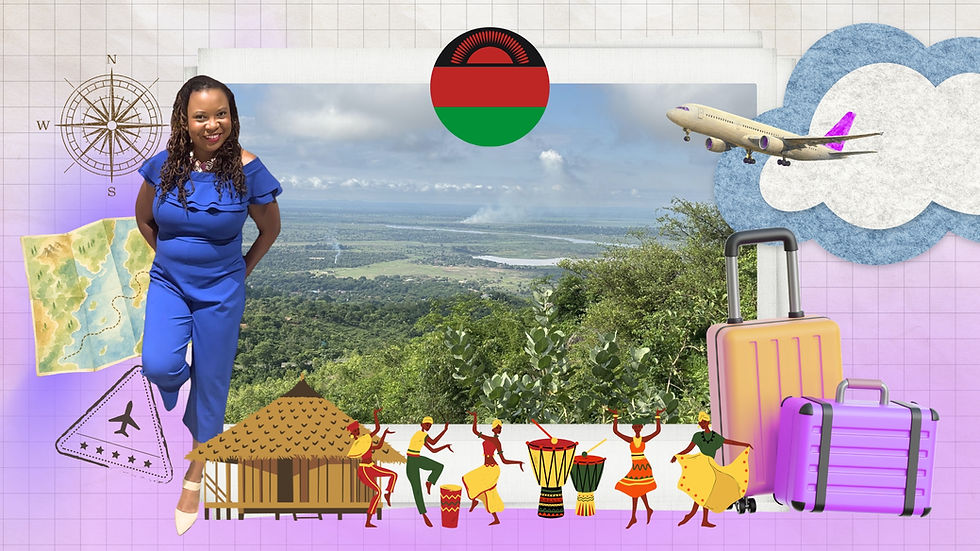
You notice the food, the scenery, the wildlife, and the landmarks. You collect photographs, buy souvenirs, and return home with stories about the places you saw.
The second is to live there.

That's when you discover the things no travel guide ever mentions.
You learn that kindness is expressed differently. That waiting has a different meaning. That privacy isn't always private. That generosity comes with its own expectations. That what seems like "common sense" may simply be the habits of the culture you grew up in.
I've been fortunate to spend time in Malawi on several occasions, but this year is different. I'm here as a Fulbright Scholar, conducting public health research while living alongside colleagues, neighbors, and friends. My days are filled with clinics, community meetings, grocery shopping, power outages, shared meals, conversations, and all the wonderfully ordinary moments that make up everyday life.

Those ordinary moments have become my greatest teachers.
One day I found a space heater sitting on a store shelf but couldn't buy it because it wasn't in the computer system.

Another day I sneezed and someone gently rubbed my shoulder while saying, "Sorry," instead of "Bless you."

I've learned that asking someone to clean a car and expecting them to clean it the way I imagined are two very different things. I've also learned that a pizza box in my rubbish bin may become tomorrow's conversation.

None of these experiences are dramatic.
None of them are life changing on their own.
But together they've taught me something I didn't expect.
Every culture has invisible rules.

They're the assumptions that everyone around you understands without ever having to explain them. They shape how people solve problems, define respect, express hospitality, share resources, communicate, and build relationships. Because these rules are rarely spoken aloud, you usually don't notice them until you unknowingly break one.
Living in Malawi has also forced me to examine my own invisible rules.

I arrived with assumptions shaped by my life in Jamaica and the United States. I assumed customer service meant solving the problem in front of you. I assumed privacy extended to what was in my trash. I assumed people would ask before making decisions on my behalf. I assumed those things were simply normal.
They aren't.
They're cultural.

One of the greatest gifts of living abroad is realizing that your own way of seeing the world isn't universal. It's simply one way among many.

This series isn't about deciding which culture is right.
It's not about ranking customs or comparing countries.
It's about noticing.
Noticing the small moments that reveal bigger truths.
Noticing how easily we mistake familiarity for universality.
Noticing that what once felt frustrating often becomes understandable once you learn the context.

Most of all, it's about the joy—and occasional embarrassment—of learning to see the world through someone else's assumptions instead of your own.
I hope these stories make you smile.
I hope they make you think.
And I hope they encourage you to become curious about the invisible rules shaping your own life.
Because somewhere in the world, the things we consider perfectly ordinary are just as surprising as the things we're trying to understand.

Welcome to The Invisible Rules of Culture.
I'm glad you're here.


Comments